
Individual Puppy Pages vs Litter Pages: Which Is Better for Dog Breeders?
Published:
When building or updating a breeder website, one common question arises:
Should puppies be listed individually, or grouped together under a single litter page?
Both approaches are widely used. Some breeders prefer to present an entire litter on one page, while others create a separate profile for each puppy.
The right structure depends on how often you have litters, how you manage updates, and how much detail you want to provide for each puppy.
In this guide, we’ll compare individual puppy pages and litter pages, outline the advantages and limitations of each, and help you decide which approach suits your breeding program best.
What Is a Litter Page?
A litter page groups all puppies from a single breeding together under one listing on your website.
Rather than creating a separate page for each puppy, the breeder presents the entire litter in one central location. This allows visitors to see the breeding, the parents, and the available puppies at a glance.
A typical litter page may include:
- The sire and dam
- Date of birth
- Expected or confirmed go-home date
- A general description of the litter
- Photos of each puppy
- Availability status (available, reserved, placed)
- Basic temperament or development notes
This approach is commonly used by breeders who want a clear, organised overview of each breeding without creating multiple individual listings.
- Litter pages work especially well for breeders who:
- Have smaller litters
- Prefer to manage updates in one place
- Focus on presenting the breeding as a whole rather than highlighting individual puppies separately
On breeder-specific platforms such as Breedpost, litter pages can also connect directly to sire and dam profiles, automatically generate pedigrees, and organise galleries per puppy within the same page. This keeps information connected while maintaining a simple structure.

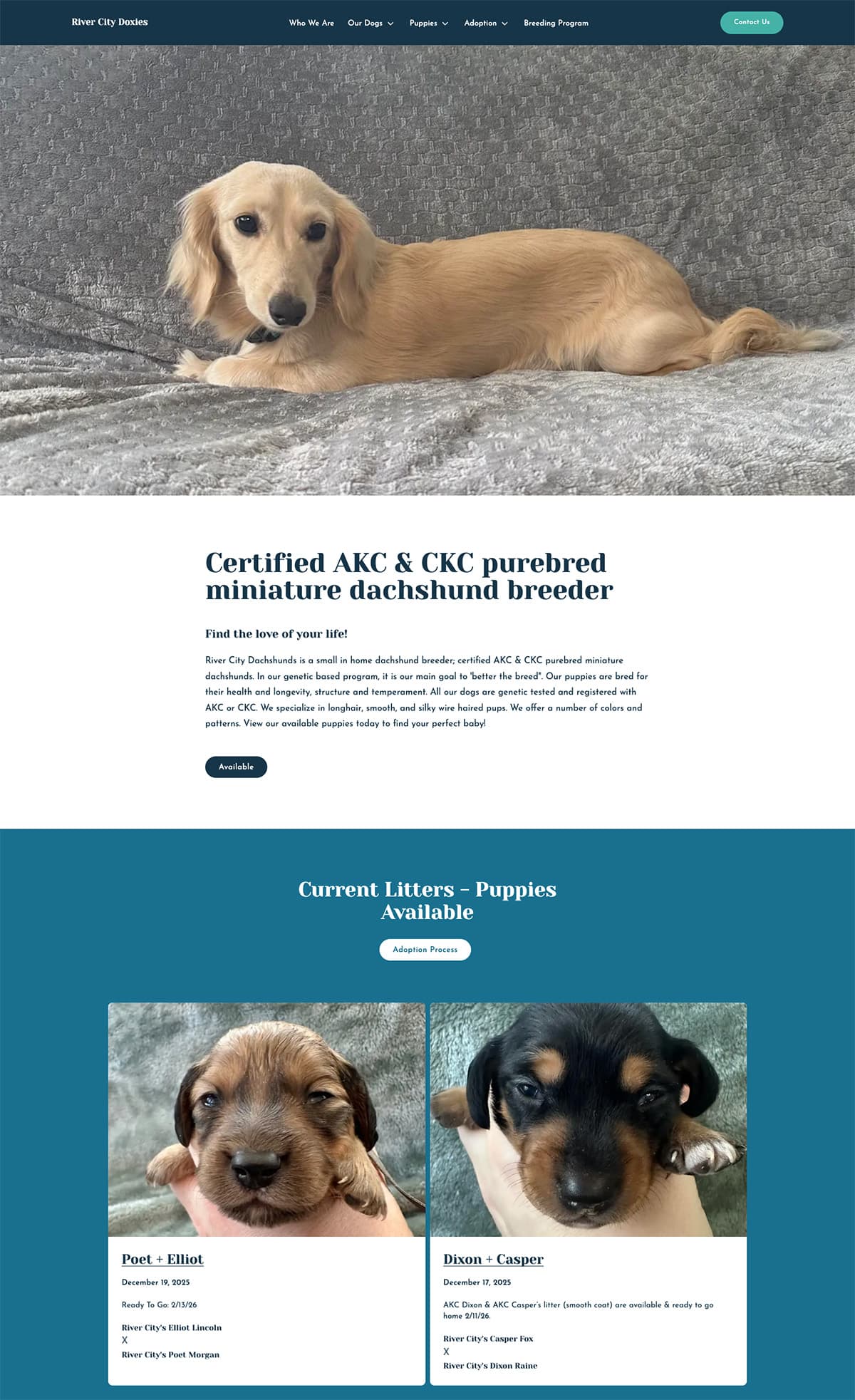
A well structured Miniature Dachshund litter page of a Breedpost client.
What Are Individual Puppy Pages?
Individual puppy pages give each puppy its own dedicated listing on your website.
Instead of grouping all puppies under a single litter page, each puppy has a separate page that can include detailed information specific to that individual.
A typical individual puppy page may include:
- The puppy’s name (or call name)
- Date of birth
- Photos and development updates
- Personality or temperament notes
- Health information
- Availability status
- Links back to the sire and dam
This approach allows breeders to present each puppy in more depth, particularly if they track development closely or provide detailed updates for buyers.
Individual puppy pages are often used by breeders who:
- Keep extensive records
- Provide regular photo updates
- Want long term archives of past puppies
- Emphasise individual placement and matching
Because each puppy has its own URL, individual pages can also be shared directly with potential buyers.
However, this structure does require more setup and organisation, especially for breeders who regularly have larger litters.
When implemented on a breeder-specific platform, individual pages can still remain connected to the litter and parent profiles, ensuring that lineage and breeding information are not lost.

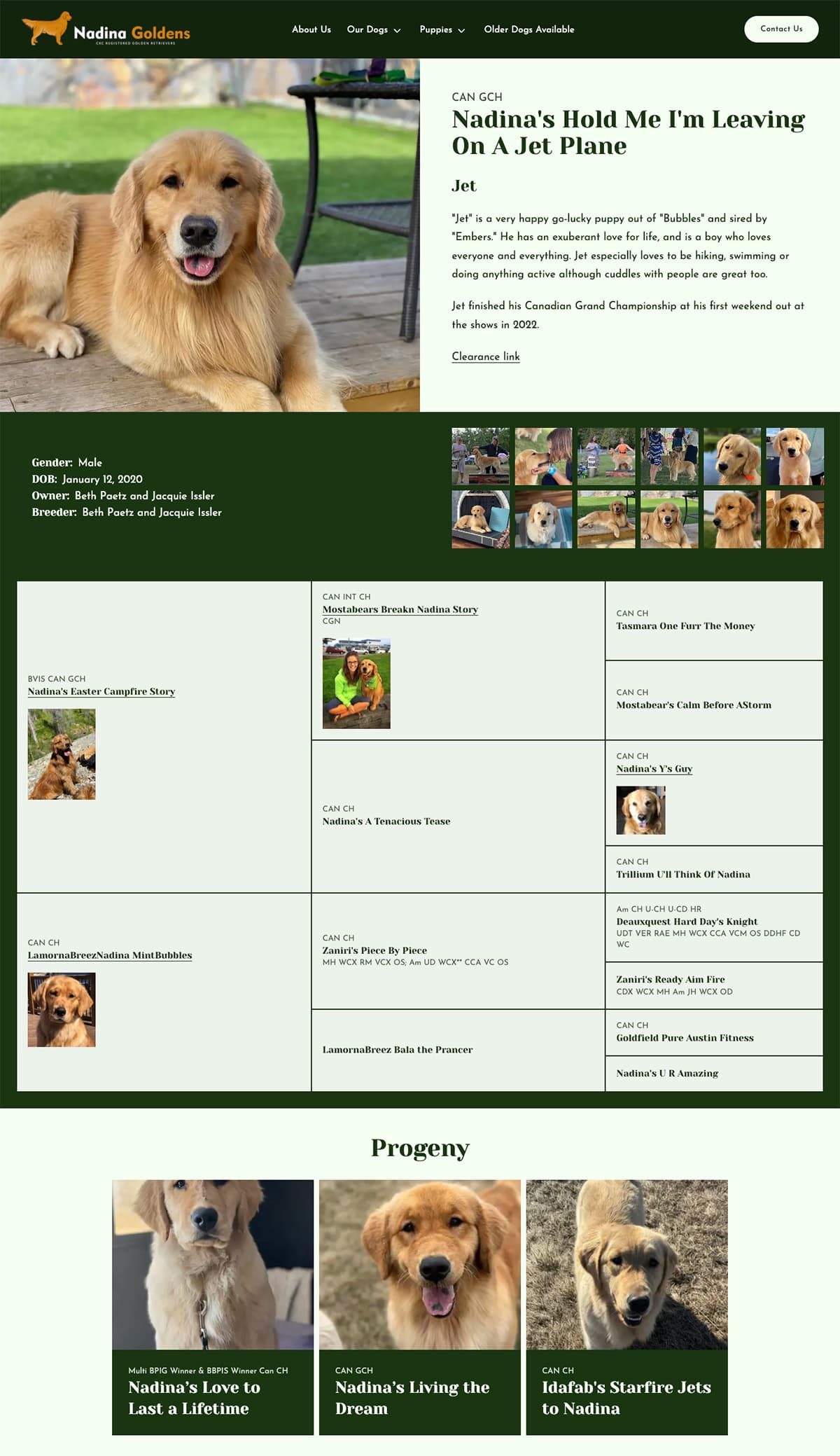
A individual puppy listing on a Breedpost client's website.
Pros and Cons of Litter Pages
Litter pages remain one of the most common ways breeders organise available puppies online. For many programs, this structure is simple, clear, and efficient.
Advantages of Litter Pages
Simple to manage
All information about a breeding is contained in one place. Updates to availability, photos, or general notes can be made within a single page.
Clear overview of the breeding
Visitors can immediately see the sire, dam, and the entire litter together. This keeps the focus on the pairing as well as the puppies themselves.
Efficient for small litters
For breeders with only a few puppies per litter, grouping them together often feels natural and uncluttered.
Quick to set up
Creating one page per breeding is generally faster than building multiple individual listings.
Limitations of Litter Pages
Individual puppies may receive less detail
When several puppies are listed on the same page, it can be harder to provide in-depth information for each one without making the page feel crowded.
Availability updates can become messy
As puppies are reserved or placed, repeated edits may be required to keep status information clear and accurate.
Less long-term archive value
Once a litter is placed, the page may be archived and rarely revisited. Individual puppy development and placement history can be harder to track over time.
Limited search surface
Because all puppies are grouped under one URL, there are fewer individual pages for search engines to index.
Pros and Cons of Individual Puppy Pages
Individual puppy pages offer a more detailed approach to presenting available puppies. Instead of grouping all puppies under one listing, each puppy has its own dedicated space.
For some breeding programs, this structure provides greater flexibility and long-term value.
Advantages of Individual Puppy Pages
More detailed presentation
Each puppy can have its own photos, personality notes, and development updates without making the page feel crowded.
Clear availability status
Because each puppy has its own page, status can be updated individually (available, reserved, placed) without affecting the rest of the litter listing.
Stronger long-term archive
Past puppies remain accessible as part of your breeding history. This can demonstrate consistency, depth, and long-term development within your program.
Direct sharing with buyers
An individual page can be sent directly to a prospective buyer, providing a clear and focused overview of that puppy.
Greater SEO surface area
Each puppy page becomes its own indexable URL. Over time, this can expand your website’s overall search presence.
Limitations of Individual Puppy Pages
More initial setup
Creating separate listings for each puppy requires more time at the beginning of the litter.
May feel excessive for very small litters
If you have only one or two puppies, a full page per puppy may not always be necessary.
Requires consistent organisation
For breeders with frequent litters, maintaining a clear archive structure is important to prevent the site from becoming cluttered.
Which Structure Is Better for SEO?
From a search engine perspective, how your content is organised can influence how easily your website is understood and indexed.
Search engines rank individual pages, not just sections within a page. This means the way you structure your puppy listings can affect how much content your site provides for search engines to crawl and interpret.
Litter Pages and SEO
When puppies are presented together on a single litter page, the entire breeding is represented by one page.
This approach:
- Keeps information consolidated
- Makes the litter itself the primary focus
- Keeps the site structure simple
For many breeders, this works well. A well written litter page with clear headings, photos, and parent information can still rank for searches related to your breed and current availability.
Search engines also value pages that are updated. When breeders update availability, add photos, or archive past litters, this signals that the site is active and maintained.
Individual Puppy Pages and SEO
Individual puppy pages create additional indexable pages on your website.
Each puppy can have:
- Its own description
- Individual photos
- Personality notes
- Development updates
- Availability status
Over time, this increases the amount of content your site offers search engines. Each page can contribute additional context about your breeding program, your dogs, and your litters.
Individual pages can also link back to related content such as:
- The sire and dam
- The breeding that produced the litter
- Other related dogs in your program
These internal links help search engines understand how the different parts of your breeding program connect together.
Clarity Matters More Than Quantity
While additional pages can expand your website’s search presence, more pages alone do not guarantee better rankings.
Search engines prioritise:
- Clear organisation
- Relevant, original content
- Logical internal linking
- Regular updates
Whether you present puppies by litter or as individual listings, the most important factors are clarity, accuracy, and consistency.
A well organised website that is maintained regularly will always perform better than one that is confusing or outdated.
Final Thoughts
Both litter pages and individual puppy pages can work well on a breeder website. The most important factor is that your listings are clear, organised, and easy for visitors to understand.
Potential buyers should be able to quickly see:
- Which puppies are available
- Who the parents are
- When the litter was born
- How to contact you or apply
When this information is presented clearly, it improves the experience for visitors and reduces confusion for breeders managing inquiries.
Over time, well organised listings also build a valuable archive of your breeding program. Past litters, parent pairings, and puppy placements all contribute to the long-term history of your website.
Whether you list puppies by litter or individually, consistency and clarity will always matter more than complexity.
If you're interested in how breeder-specific website platforms handle litter pages, individual listings, pedigrees, and breeding announcements, you can explore the features of Breedpost here.

If you're planning the structure of a breeder website, you may also find our Dog Breeder Website Checklist for 2026 helpful.
Related articles
25 February 2026
Dog Breeder Website Checklist (2026 Edition)
19 March 2026