25 February 2026

Published:
If you are planning a website for your breeding, one of the best places to start is by looking at what other breeders are doing.
A well-structured website makes it easy for visitors to:
Below are examples of dog breeder websites, along with what makes them work well and what you might want to include on your own.
Before looking at examples, it helps to understand what actually matters.
A good breeder website is not about flashy design. It is about clarity, structure, and making it easy for visitors to find what they are looking for.
Your homepage should quickly show who you are and what you have available. This usually includes a strong image, a short introduction, and a section for current or upcoming litters so visitors can immediately see what is happening.
Each dog should have their own page with photos, pedigree, and key details. This allows visitors to properly explore your dogs without everything being crowded onto one page.
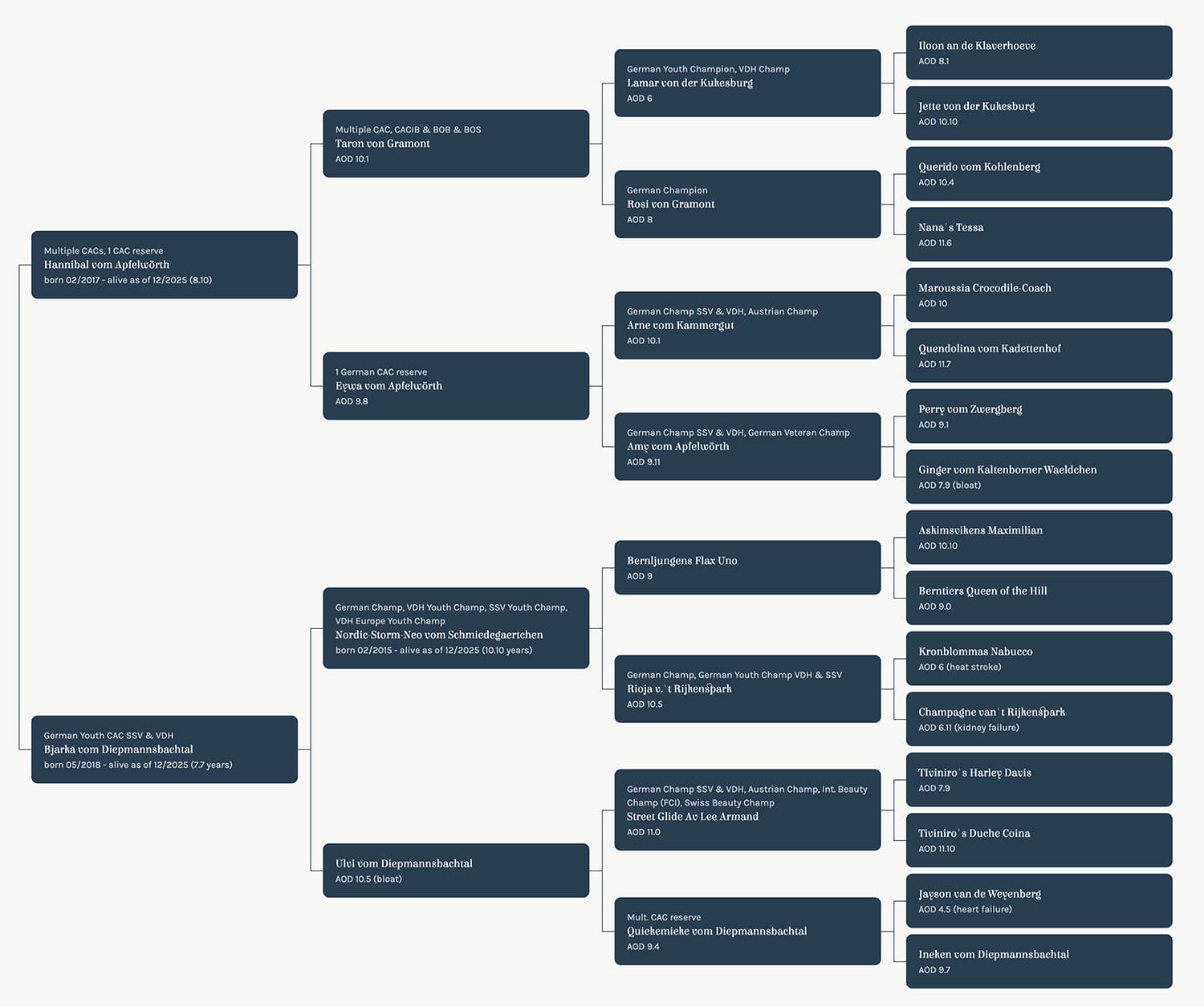
Clear pedigree information helps show your lines and gives buyers confidence. Whether simple or detailed, it should be easy to read and accessible from each dog’s page.
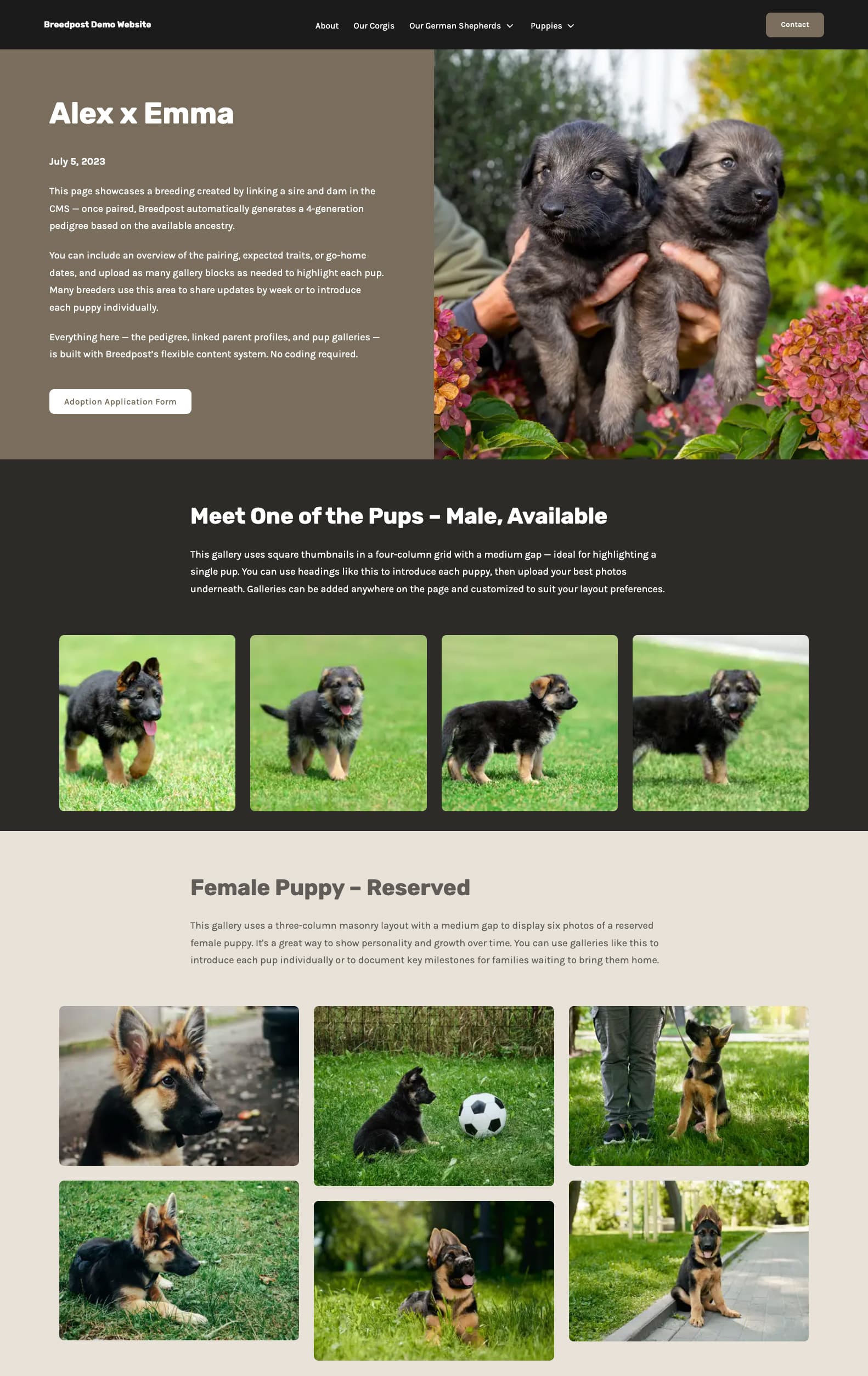
Dedicated pages for litters keep everything organised. These pages can include parents, dates, updates, and photos, rather than mixing this information across multiple sections.
Good photography makes a big difference. Clean, well-organised galleries help present your dogs and puppies in the best possible way.
Make it easy for people to get in touch. A clear contact form or application form helps manage enquiries and keeps communication simple.

A litter page on Copestone Whippets' website displaying a four generation pedigree and a separate section to meet the parents.
copestonewhippets.com
Below are some examples of dog breeder websites, each highlighting a different approach to layout, structure, and content.
As you go through them, think about what works well and what you might like to include on your own site.
A simple layout with:
This works well because visitors immediately understand what is available.
Keep your homepage focused. Avoid too much text and highlight what matters most right now.

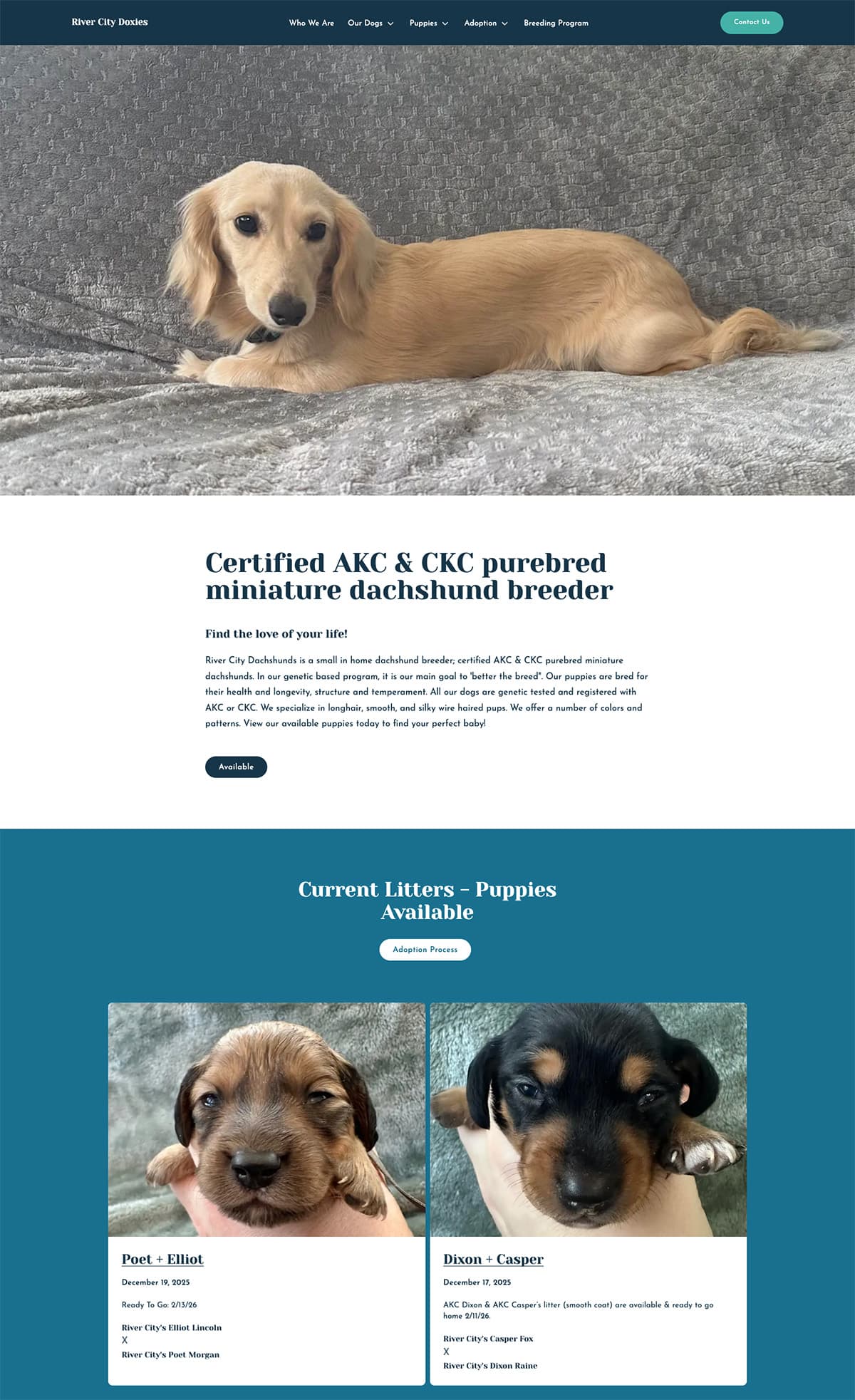
River City Doxies have a clear and focused homepage with a strong hero image, a simple tagline, and a section highlighting their current litters.
rivercity-doxies.com
Pedigrees are an important part of many breeders’ websites, especially where lineage and consistency matter.
A clear, well-presented pedigree helps visitors understand your dogs, your lines, and the thinking behind your breedings.
Some breeder websites include:
When presented well, pedigrees become more than just information. They help tell the story of your dogs and how your breeding has developed over time.
If pedigree is important in your breeding, make it easy to view and understand. Clear presentation and consistency make a big difference.
If you want to go deeper, you can read more about how pedigrees work and how to present them clearly on your website.

Faubion Malinois showcase their dogs with detailed profile pages that include pedigrees and automatically generated progeny, making it easy to explore their lines.
faubionmalinois.com
Well-structured breeding pages keep each litter organised and easy to follow.
Instead of combining everything into one long page, giving each breeding its own page allows you to present clear, relevant information in one place.
These pages often include:
This makes it easier for visitors to understand the pairing and follow along as things progress.
Avoid putting everything on one page. Giving each breeding its own space keeps your website clear, easier to navigate, and much more useful for visitors.
If you want to go deeper, you can read more about how to structure litter pages and what to include.

Texas Dreams Miniature Schnauzers use dedicated litter pages with a “meet the parents” section linking to each dog’s profile, along with individual galleries for each puppy.
texasdreamsminischnauzers.com
High-quality photography makes a big difference to how your website is perceived.
For most visitors, your images are the first thing they notice. Clear, well-composed photos help present your dogs properly and create a strong first impression.
Sites that work well tend to:
Good photos are one of the most important parts of your website. A clean layout paired with strong images will always look more professional than a busy design with poor-quality photos.

Easterbrook Moyen Poodles have a visually striking homepage with beautiful photography complemented by a carefully chosen colour palette.
easterbrookmoyenpoodles.com
Across these examples, a few things stand out.
Dogs, litters, and contact information are separated into their own sections.
Visitors can quickly find what they are looking for without searching.
High-quality photos are used consistently throughout the site.
Pedigrees, parent information, and updates are included where it matters.
These are the elements that make a breeder website feel complete and trustworthy.
If you are starting from scratch, focus on structure first rather than design.
A simple setup could include:
Rather than placing everything on one page, separating your dogs, litters, and contact information makes your site much easier to navigate.
From there, you can expand over time by adding more detail, photos, and updates as your breeding grows.
All of the features mentioned above can be created using tools designed specifically for breeders.
Breedpost is built for dog, cat, horse, and goat breeders, making it easy to:
If you are looking to create your own website, you can explore how it works here.
Looking at other dog breeder websites is one of the best ways to understand what works.
Keep your structure clear, your content organised, and your focus on your dogs and litters.
That is what visitors are there to see.