
Dog Breeder Website Checklist (2026 Edition)
Published: | Updated:
Many breeders rely heavily on Facebook or social media to promote their litters. Others have websites that were built years ago and have not been updated in years.
In 2026, a professional breeder website needs more than just photos and a contact page. It should clearly present your breeding program, demonstrate transparency, and make it easy for potential buyers to understand your standards.
Whether you raise dogs, cats, horses, or goats, this checklist outlines the core elements every responsible breeder website should include.
Use it to review your current site or to guide the structure of a new one.
A well built breeder website does more than display puppies. It builds credibility, supports your screening process, and strengthens long term visibility.
1. A Clear, Professional Homepage
Your homepage is often the first impression someone has of your breeding program.
Within seconds, visitors should understand:
- What breed or breeds you raise
- Where you are located
- Whether you currently have litters available
A homepage should be structured clearly. It should not be built as one large block of text or a single graphic banner with everything embedded inside an image.
A strong homepage typically includes:
A clear primary heading (H1)
This should immediately state your breed or breeding program name.
A supporting subheading (H2)
A short statement that explains your focus, such as health tested family companions, preservation breeding, or show lines.
A short introductory paragraph
Briefly explain your breeding philosophy and standards.
A clear call to action
Examples include:
- View Current Litters
- Submit an Application
- Join the Waiting List
A structured layout with image support
Images may be presented as:
- A full width banner
- A split layout with text and image side by side
- A clean text section followed by a gallery
The key is that images support your message rather than replace it. Search engines cannot read large blocks of text embedded inside images.
A well structured homepage is easier to maintain when the platform provides dedicated fields for headings, introductory text, calls to action, and flexible layout options. At Breedpost, these elements are built in, allowing breeders to update content without worrying about formatting or layout consistency.
Common mistakes to avoid
- Embedding large amounts of text inside banner images
- Leaving outdated litter information visible
- Providing no clear next step for visitors
- Overloading the homepage with too many sections
- Burying important information below excessive scrolling
A homepage should feel structured and intentional. It does not need to be complex, but it must be clear, current, and easy to navigate.

Example of a structured breeder homepage with a clear primary heading, supporting text, and call to action. faithacres.net
2. A Strong About Page That Builds Trust
For many visitors, the About page is where trust is built.
Buyers are not just choosing a puppy, kitten, foal, or kid. They are choosing the breeder behind the animal. Your About page should clearly explain who you are, what you stand for, and how you approach your breeding program.
A strong About page should include:
- Why you started your breeding program
- How long you have been involved with the breed
- Your breeding goals and philosophy
- How your animals are raised
- Your approach to health testing
- Any involvement in showing, performance, or breed clubs
Transparency matters. Responsible breeders who openly share their standards immediately stand apart from casual sellers.
Avoid vague statements such as “raised with love” without explaining what that means in practice. Instead, be specific about:
- Health screening protocols
- Temperament priorities
- Frequency of litters
- Living conditions
- Long term goals for improving the breed
- Specificity builds credibility.
Structure Matters
Your About page should be easy to read and well organised. Break content into sections with clear headings rather than placing everything in one long block of text.
Including supporting images can also help tell your story. These may include:
- Photos of your breeding dogs or does
- Images from the show ring
- Milk testing or performance participation
- Puppies or kids being raised in your home environment
At Breedpost, flexible content blocks such as rich text, image and text layouts, galleries, testimonials, and related listings allow breeders to structure their About page clearly and professionally. This makes it easy to tell your story, showcase your animals, and present health and breeding information without worrying about formatting or layout consistency.
A thoughtful About page reassures serious buyers and reinforces that your breeding program is established, ethical, and intentional.

Example of a structured About page using a clear hero section and image and text layouts to present information clearly. nadinagoldens.com/about-us
3. Published Health Testing and Clearances
Health transparency is essential for a professional breeder website in 2026.
Serious buyers expect clear information about the health testing and screening behind your breeding program. Your website should make this information easy to find and easy to understand.
A strong health section should clearly display:
- DNA testing results
- Breed specific health screening
- OFA or equivalent certifications
- Any additional veterinary checks or evaluations
- Participation in performance programs, where relevant
Do not rely solely on screenshots or scanned documents uploaded without explanation. While certificates are important, they should be supported by clear written context.
Instead, consider:
- Listing each health test individually
- Explaining what each test means for your breed
- Identifying which dogs have completed testing
- Linking directly to individual dog profiles where health information is published
Clear structure improves credibility. When health information is organised and easy to navigate, it demonstrates professionalism and confidence in your breeding program.
Make It Easy to Understand
Not all visitors are familiar with breed specific health terminology.
Brief explanations alongside test results can help buyers understand:
- Why testing matters
- What conditions are screened
- How your breeding decisions are guided by results
- Transparency builds trust. Clarity strengthens that trust.
Structured Presentation Matters
Health information should not be buried inside long paragraphs on an About page.
At Breedpost, breeders can display health testing clearly within individual profiles, dedicated health sections, and structured listings that connect directly to each dog or breeding. Health results can also be included within pedigrees themselves, ensuring that transparency around testing sits alongside lineage and titles. This integrated approach keeps information organised, professional, and easy to update as results change.
When health data is presented in a structured way, it reflects the standards of the breeding program itself.

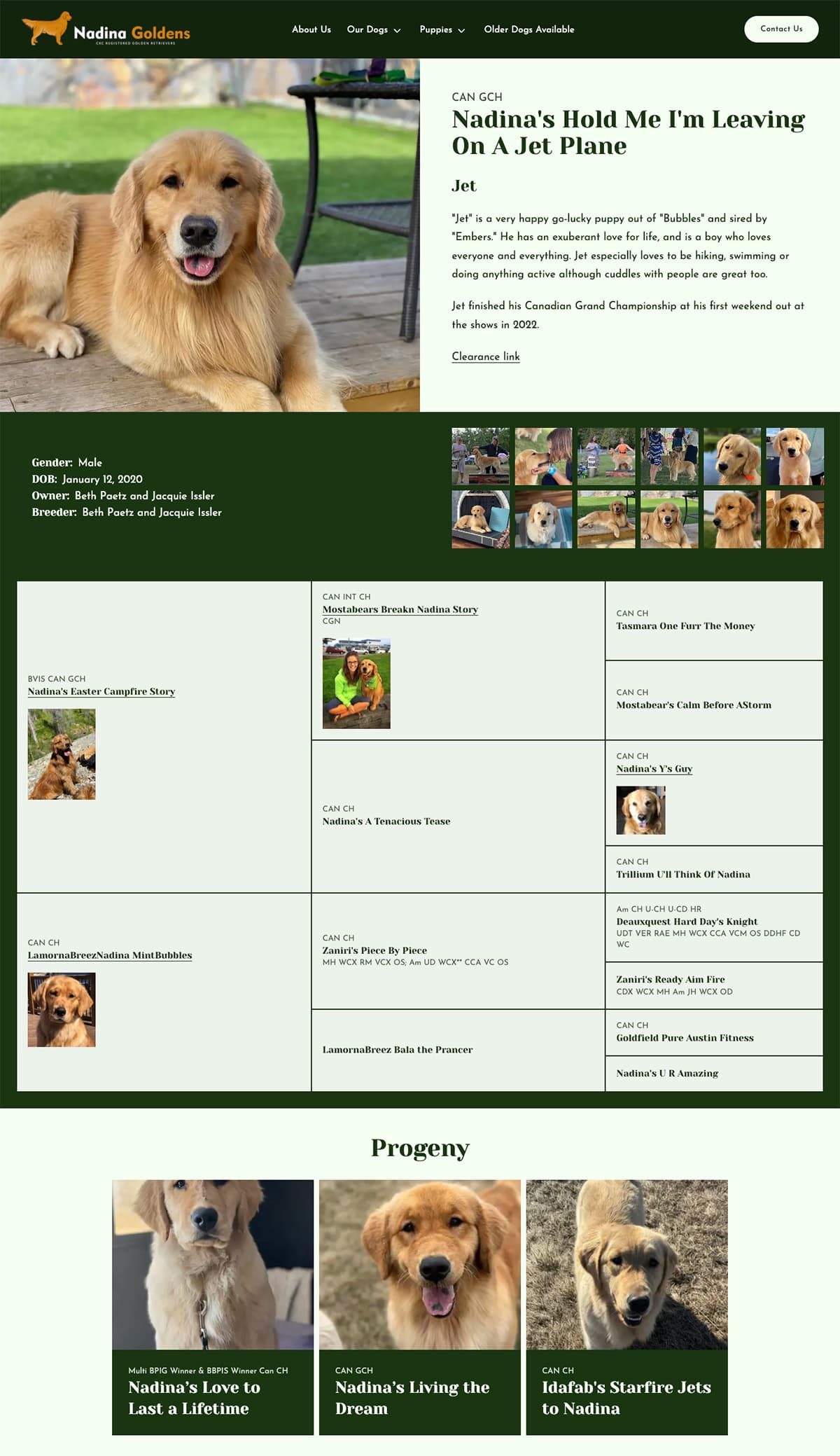
Example of health testing published on a dog’s profile page, with ED and HD results integrated directly into the pedigree for clear, accessible transparency. aceofheartsk9s.com/our-german-shepherd-dogs/xet-von-ducati
4. Structured Pedigrees
For many breeding programs, pedigrees are central to credibility and long term planning. How they are presented on your website makes a significant difference to both visitors and long term management.
Many breeder websites still rely on:
- Static pedigree images
- Uploaded PDF documents
- Screenshots from external databases
- Manually built tables
While these methods display lineage, they are often difficult to update and do not allow visitors to explore related dogs easily.
A professional breeder website should present pedigrees in a way that is:
- Clear and easy to read
- Mobile friendly
- Connected to individual dog profiles
- Simple to expand as your program grows
Better for Visitors
When pedigrees are structured and linked, visitors can move naturally through generations. They can click through to see individual dogs, explore related breedings, and understand the depth of your program without needing to download documents or zoom into images.
This creates a more engaging and informative experience, particularly for serious buyers who value lineage.
Easier to Maintain Over Time
For breeders with growing databases, manually creating pedigree charts becomes time consuming.
A structured system allows you to:
- Create individual profiles once
- Reuse those profiles across multiple breedings
- Automatically generate pedigree views
- Build depth in your database without recreating content
As more individuals are entered into your system, profile pages and breeding pages become easier to create rather than more complicated.
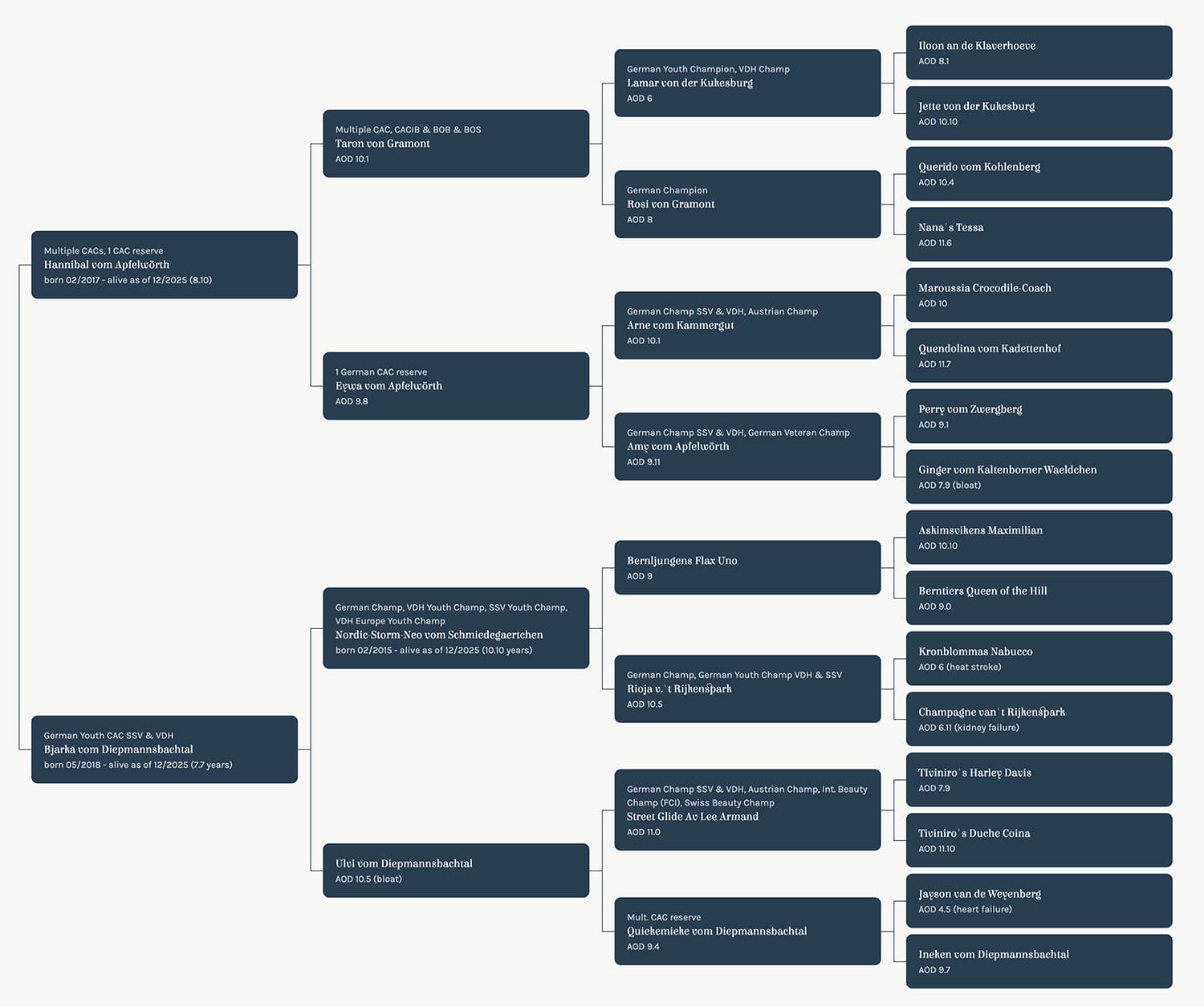
At Breedpost, pedigrees are dynamically generated from your database. This makes it significantly easier to manage large numbers of individuals and build breeding pages quickly, while keeping everything connected and organised.
For breeders who work with detailed lineage, a structured pedigree system is not just visually cleaner. It becomes a practical long term asset.

Example of a four generation pedigree dynamically generated from a database of over 600 dogs, with lineage extending to great great grandparents. kabova.com/our-pugs/kabova-bit-on-the-side
5. Litter or Individual Puppy Pages
Your puppies, kittens, kids, or foals should not be buried inside a single paragraph on your homepage.
Each litter or individual listing should have its own dedicated space on your website. This creates clarity for visitors and makes it easier to keep availability information accurate.
A strong litter or individual page should include:
- Sire and dam information
- Expected or actual birth dates
- Availability status
- Clear photos
- Temperament or personality notes
- Clear next steps for inquiry
Listing by Litter or Individually
Some breeders prefer to list puppies by litter. Others prefer individual profile pages for each puppy or kitten. You can read more about the differences in our guide on Individual Puppy Pages vs Litter Pages.
Both approaches can work well.
What matters most is:
- Clear structure
- Accurate availability updates
- Easy navigation
- A consistent format across listings
Buyers should never have to search through old posts or scroll endlessly to find out what is currently available.
Keep Past Litters Organised
Archiving past litters is valuable.
It demonstrates:
- Consistency in your breeding program
- History and depth
- Transparency over time
Well organised archives also make your website feel established and maintained.
Build Once, Reuse Often
When your platform connects individual profiles, parents, and breeding pages together, creating new listings becomes much simpler.
At Breedpost, breeding announcements can connect directly to sire and dam profiles, automatically generate pedigrees, and allow breeders to create organised listings without duplicating information. As your database grows, building new litter pages becomes faster and more efficient rather than more complicated.
For breeders who regularly update litters, structure saves time and reduces errors.
Clear, well organised litter pages not only improve visitor experience. They also strengthen professionalism and trust.

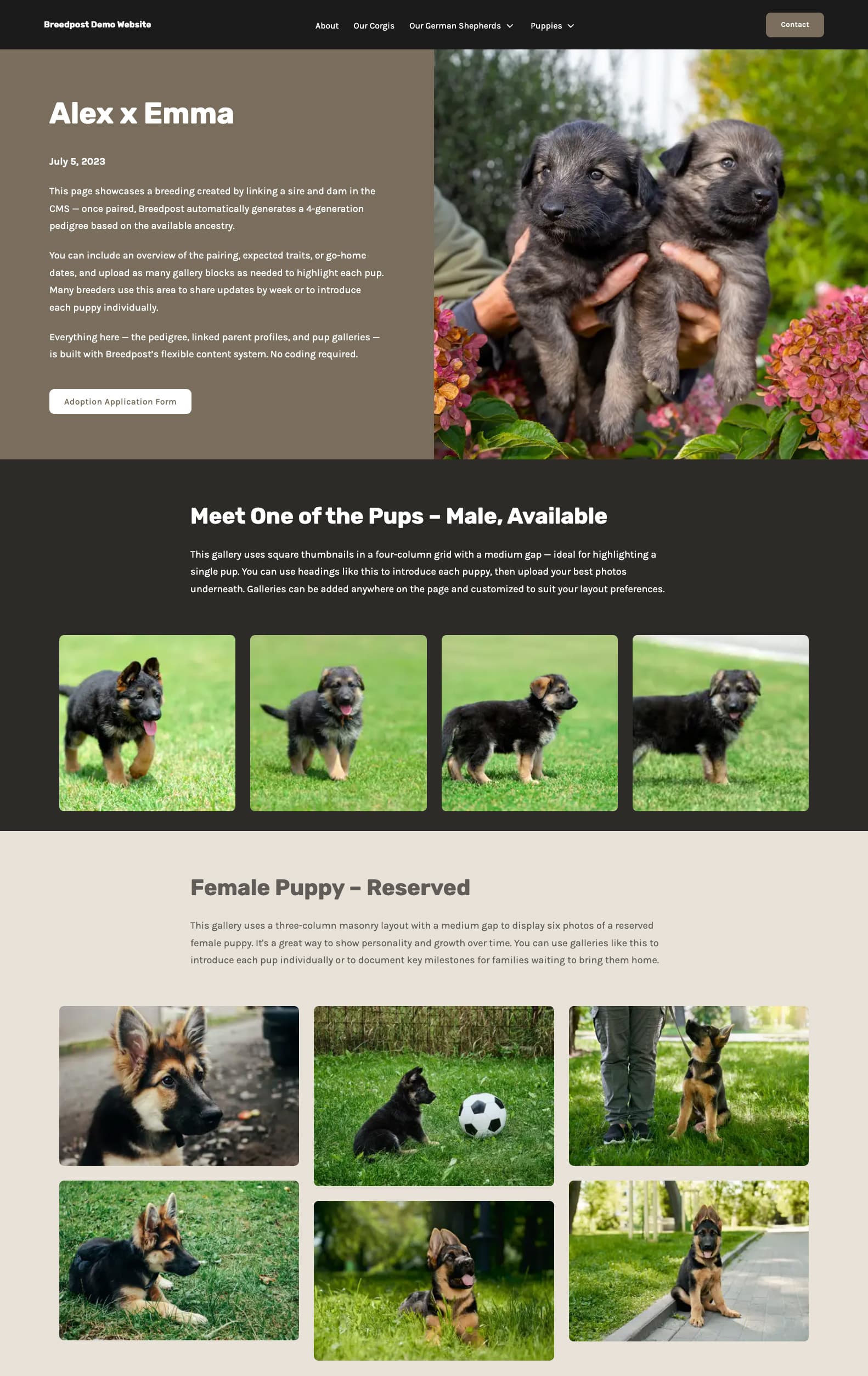
Example of a litter page organised with individual galleries for each puppy, keeping images structured and easy to navigate. https://spinkspuppiesofalabama.com/
6. A Clear Inquiry and Screening Process
Serious breeders do not rely solely on direct messages or casual email inquiries.
Your website should clearly outline how potential buyers contact you and what your screening process involves.
This may include:
- An application form
- A detailed contact form
- A clearly explained waitlist process
- Information about deposits and policies
- Frequently asked questions
The goal is not just to collect messages. It is to set expectations.
Why Clarity Matters
When inquiries arrive through social media messages or brief emails, important details are often missing.
A defined inquiry process helps you:
- Gather consistent information from each applicant
- Save time responding to repetitive questions
- Maintain records
Communicate your standards professionally
Some breeders use built in website forms. Others integrate external services such as Jotform or Cognito for more advanced capabilities.
What matters most is that your process is clear and easy to follow.
- Visitors should understand:
- What information you require
- What your selection process involves
- What happens after they apply
- Approximate wait times
A clearly explained screening process reflects organisation, intention, and professionalism.
7. Testimonials and Social Proof
For many potential buyers, reviews provide reassurance.
Even when someone has carefully reviewed your health testing, pedigrees, and breeding philosophy, they often look for confirmation from other families who have purchased from you.
Testimonials help demonstrate:
- The experience buyers had working with you
- The temperament and quality of your animals
- Ongoing support after placement
- Consistency across multiple litters
Instead of relying solely on screenshots from social media, consider displaying testimonials clearly within your website.
Well presented testimonials should:
- Be easy to read
- Use consistent formatting
- Include first names and general location
- Be updated over time
Social proof strengthens credibility, particularly for first time visitors who may not be familiar with your breeding program.
It also shows longevity. When buyers see feedback spanning several years, it reinforces that your program is established and trusted.

Example of a homepage featuring a dedicated testimonial section, helping reinforce trust and credibility. https://camelotshepherds.com/
8. Mobile Friendly and Fast
Most visitors will view your website on a mobile device.
Your homepage, litter pages, pedigrees, and contact forms should all function clearly on a phone screen. Text should be easy to read, navigation should be simple, and images should resize properly without cutting off important information.
A mobile friendly breeder website should:
- Load quickly
- Display headings clearly
- Avoid oversized image files
- Keep navigation simple
- Avoid large blocks of text inside images
Speed matters. Slow websites frustrate visitors and reduce trust.
Modern website platforms should handle image optimisation, responsive layouts, and security automatically, allowing breeders to focus on content rather than technical adjustments.
A clean, fast website reflects professionalism and attention to detail.
9. Ongoing Updates and Maintenance
An outdated website reduces confidence immediately.
If visitors see:
- Litters listed from two years ago
- “Puppies available” when none are
- Retired dogs still shown as active
- Broken links
They may assume the site is no longer maintained.
Regular updates should include:
- Updating litter availability
- Retiring dogs appropriately
- Adding new testimonials
- Updating health testing information
- Archiving past litters
A well maintained site signals that your breeding program is active, organised, and established.
Search engines also favour websites that are updated consistently. Even small updates over time help maintain visibility.
Consistency matters more than complexity.
Final Thoughts
Your website is often the first interaction someone has with your breeding program.
It should reflect the care, planning, and transparency that go into your work.
A clear homepage, detailed About page, visible health testing, organised pedigrees, dedicated litter pages, a defined inquiry process, testimonials, and regular updates all contribute to a professional online presence.
Whether you are reviewing your current site or building a new one, this checklist provides a foundation for presenting your breeding program clearly and confidently in 2026.
If you would like to see how these elements can be implemented in a breeder-specific platform, explore the Breedpost features here.
If you’re reviewing platforms, you can view current pricing here.
Frequently Asked Questions
What should a dog breeder website include?
A professional breeder website should include a clear homepage, detailed About page, visible health testing, structured pedigrees, dedicated litter pages, testimonials, and a defined inquiry process.
Do dog breeders really need a website if they use Facebook?
Social media can support marketing, but a website provides stability, credibility, search visibility, and long term control over your content.
How often should a breeder update their website?
Websites should be updated whenever litter availability changes, health testing is completed, or new testimonials are received. Even small regular updates help maintain trust and visibility.
Should puppies be listed individually or by litter?
Both approaches can work. The most important factor is clarity and keeping availability information accurate and easy to find.